



Why Won’t My Mazda Start?
When your Mazda won’t start, frustration sets in fast. You’re running late, and suddenly your dependable car has turned into a stubborn obstacle. At Kiefer Mazda, we help Eugene drivers figure out why their Mazda won’t start by spotting symptoms and tracking them back to the real problem. This guide covers the most common starting issues our team encounters, ranging from battery troubles to electrical and fuel system breakdowns.
Starting problems don’t usually show up out of nowhere. Your Mazda talks to you through clear symptoms: complete silence, repetitive clicking, or an engine that cranks but never catches. Each symptom points to specific components. Once you understand these signals, you can diagnose problems more quickly and figure out whether you need a simple fix or professional help.
Identifying Your Mazda Starting Problem by Symptoms
How your Mazda responds when you try starting gives you valuable diagnostic clues. Pay attention to what happens when you turn the key or push the start button. Does anything respond at all? Any mechanical sounds? Does the engine turn over without starting? These details help you zero in on the problem.
We’ve put together this diagnostic table to help you identify what’s wrong:
| Symptom | Likely Causes | DIY Check? | Professional Needed? |
| No response (no lights, no crank) | Dead battery, blown fuse, faulty starter, bad ignition switch | Yes – battery test, fuse inspection | If basic checks fail |
| Clicking/grinding sounds | Weak battery, faulty starter motor | Yes – battery test, jump-start attempt | If clicking persists after charge |
| Cranks but won’t fire | Fuel pump, clogged filter, dirty injectors, faulty regulator | Limited – listen for pump, check fuel smell | Yes – requires diagnostic equipment |
| No response to push-button | Key fob battery, immobilizer issue | Yes – replace fob battery, test spare key | If spare key also fails |
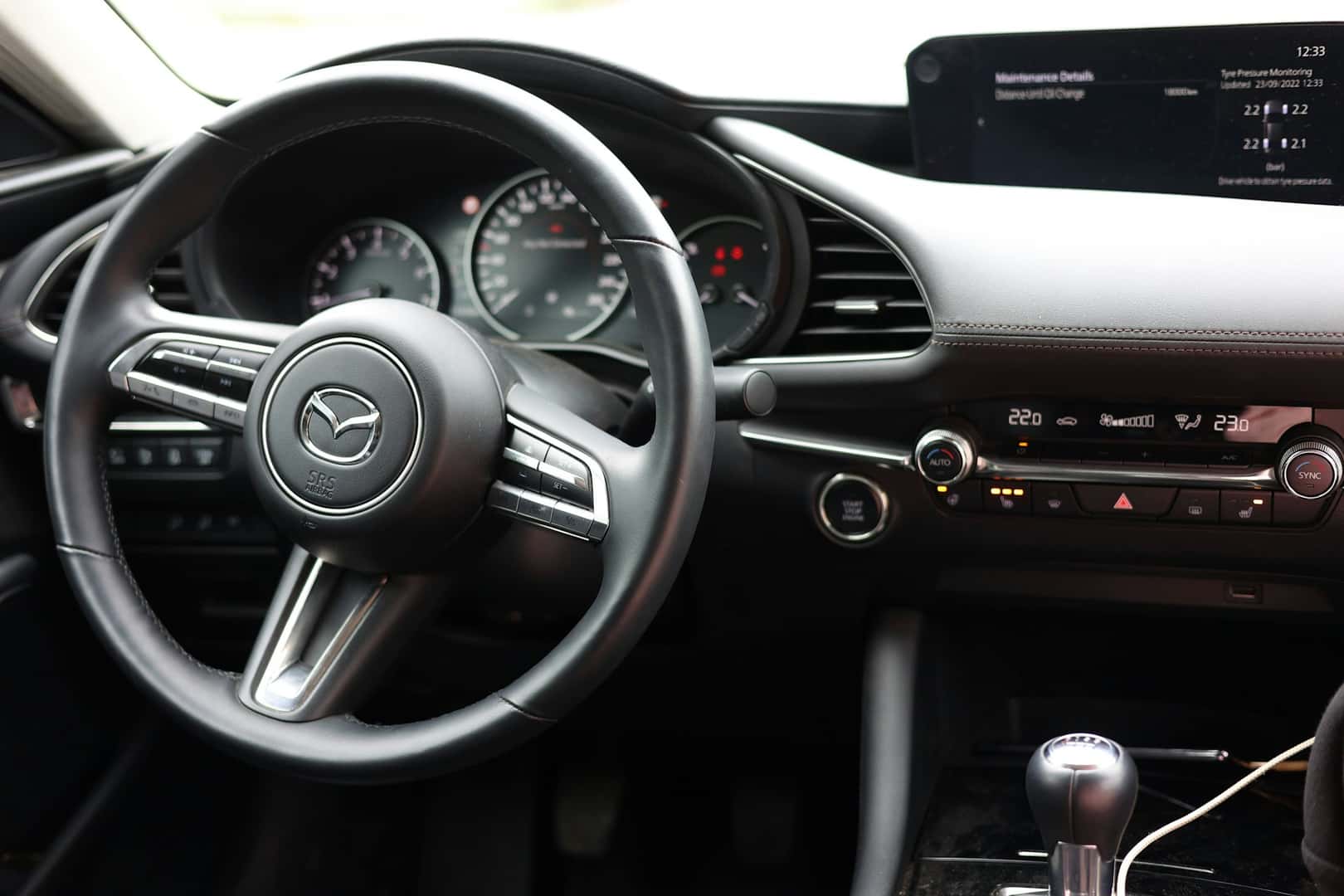
Nothing Happens When You Turn the Key or Press the Button
Complete silence when starting typically means you’ve got an electrical problem. If dashboard lights won’t turn on or look extremely dim, not enough electrical power is getting to essential systems. A dead battery is your most likely culprit, but corroded terminals or a bad ignition switch can create the exact same symptoms.
Check if any dashboard lights work in accessory mode. Nothing lighting up usually means your battery is completely dead. Flickering lights suggest partial charge that’s not strong enough to run the starter motor. Pacific Northwest winters and wet conditions speed up corrosion on battery terminals, blocking electricity flow even from healthy batteries.
Clicking or Grinding Sounds Without Starting
Clicking sounds without starting mean your starter motor is trying to engage but either doesn’t have enough power or can’t turn the engine mechanically. One loud click tells you the starter solenoid engages but can’t complete the circuit. Rapid clicking usually points to weak battery voltage reaching the starter.
Test your battery before you assume starter failure. A battery that’s fine for lights and accessories might still not have enough cranking power. If battery voltage looks good and you’re still getting clicks, your starter motor probably needs replacement.
Engine Cranks But Won’t Fire Up
An engine that turns over without starting has plenty of electrical power but problems somewhere else. Your starter works fine, but combustion isn’t happening. This usually involves fuel delivery or ignition system failures.
Listen for your fuel pump when you turn the key to “on.” Most Mazda models make a brief humming sound from near the fuel tank as the pump primes. No sound might mean pump failure or electrical problems. Ignition system troubles like bad spark plugs, worn coils, or failed control modules prevent the spark you need for combustion.
Dead or Weak Battery: The Most Common Culprit
Battery problems cause most Mazda starting issues we see at our Eugene service center. Even batteries that worked perfectly yesterday can fail suddenly, especially when temperatures drop. Most car batteries last three to five years, but Pacific Northwest temperature swings and lots of short trips wear them out faster.
A healthy battery should read 12.6 volts when the engine is off. Readings below 12.2 volts indicate weakness, while anything under 12 volts means serious depletion that needs immediate attention. Cold Eugene mornings can reduce battery capacity enough to prevent starting even with adequate charge for warmer weather.
You can spot early warning signs with a visual inspection. Corrosion around terminals shows up as white, blue, or greenish buildup that blocks electrical connections. Swelling or bulging cases indicate internal damage and failure that’s coming soon.
Quick Battery Tests You Can Do at Home
Testing battery voltage takes just a few minutes with a multimeter. A fully charged battery should read 12.6 volts with the engine off. Turn on your headlights and watch their brightness (dimming means a weak battery struggling to supply power). If headlights dim dramatically during starting attempts, your battery doesn’t have enough cranking power.
Battery terminal connections should be tight without any movement when you wiggle them. Clean corrosion using a wire brush and baking soda solution, then rinse thoroughly and dry before reconnecting.
How to Safely Jump-Start Your Mazda
Jump-starting requires the right procedure to avoid damaging electrical systems. Park a car with a good battery close enough for jumper cables to reach comfortably. Both vehicles should be in park with parking brakes set and engines off.
Connect cables in this order:
- Positive (+) cable to dead battery positive terminal
- Other positive cable to donor battery positive terminal
- Negative (-) cable to donor battery negative terminal
- Final negative cable to unpainted metal on your Mazda’s engine block (away from battery)
Start the donor vehicle and wait 2-5 minutes before trying to start your Mazda. After it’s running, remove cables in reverse order. Keep your Mazda running at least 20 minutes to recharge the battery. If your car won’t start after a successful jump, you’ve got other electrical problems that need professional diagnosis.
Fuel System and Ignition Problems
Fuel system failures prevent gasoline from reaching combustion chambers. The fuel pump pressurizes fuel and delivers it from tank to engine. When pumps fail, no fuel reaches the engine no matter how much it cranks. Pumps usually show warning signs before they completely die: whining noises from the fuel tank, engine sputtering, or tough starting after sitting.
Clogged fuel filters gradually reduce flow, eventually preventing adequate delivery. We recommend fuel filter replacement every 30,000-40,000 miles, though dirty fuel speeds up clogging. If your Mazda cranks without starting and filter replacement is overdue, this component deserves a look.
Ignition system components create the spark that ignites the air-fuel mixture. Spark plugs wear over time, building up deposits that prevent reliable sparking. Ignition coils transform battery voltage to the high voltage spark plugs need. When coils fail, cylinders get no spark, making starting impossible despite good fuel delivery.
Mazda Smart Key and Push-Button Start Issues
Modern Mazda models with push-button start add complexity to starting problems. If your Mazda3 or CX-5 won’t respond to the start button, the smart key system might be blocking ignition. These systems depend on radio frequency communication between the key fob and vehicle computer.
Weak key fob batteries cause intermittent starting problems. Your vehicle might not detect the key’s presence, preventing start button function. Replace key fob batteries annually as preventive maintenance.
Electronic interference from strong radio signals can temporarily disrupt communication between fob and vehicle. Sometimes moving away from interference sources fixes the issue. If interference isn’t the problem, hold the key fob directly against the start button or designated sensor area to try starting.
System resets occasionally fix stubborn smart key issues. Disconnect your vehicle’s battery for several minutes, letting computer systems reset completely. Keep in mind that disconnection erases radio presets and convenience settings.
Step-by-Step Troubleshooting Guide for Mazda Owners
Start with the simplest possibilities. Make sure the transmission is fully in park or neutral, since starting interlocks prevent ignition in other positions. Check that the steering wheel isn’t locked by turning it slightly while turning the key.
Test battery voltage using the methods we described earlier. If voltage reads low, try a jump-start. Successfully starting after jump-starting confirms battery issues. If jump-starting doesn’t work, inspect battery connections and cables for corrosion or damage.
When battery and connections look good but you get no crank with a good battery, the starter motor or electrical connections need attention. Check the starter relay and fuses in your fuse box, replacing blown fuses with correct amperage ratings.
Write down each symptom and test result as you troubleshoot. Note when problems happen (after sitting overnight, following short trips, or during specific temperatures). These details help identify patterns pointing toward specific causes and assist our technicians if professional diagnosis becomes necessary.
Preventing Future Starting Problems
Regular maintenance dramatically cuts down unexpected starting failures. Follow Mazda’s recommended maintenance schedule for battery testing, fuel system inspection, and ignition component replacement. Battery replacement typically happens every 3-5 years under normal conditions.
Battery maintenance extends service life. Keep terminals clean and tight. Test battery voltage monthly, especially before Eugene’s winter season. Replace batteries proactively when they’re approaching four years old rather than waiting for failure.
Fuel system care prevents contamination-related problems. Add fuel system cleaner periodically to prevent deposits. Replace fuel filters on schedule. Avoid running your tank extremely low regularly, since this forces the pump to draw sediment from the tank bottom.
Handle engine performance issues quickly, since running problems often indicate developing ignition system failures that need attention before they prevent starting.
When to Schedule Professional Mazda Service
Some starting problems go beyond typical owner diagnostic abilities. Complex electrical issues require specialized diagnostic equipment to trace problems through multiple systems. Computer-controlled components need proper testing tools for accurate failure identification.
Signs You Need Professional Diagnostics
Persistent problems that resist straightforward troubleshooting deserve professional attention. If you’ve tested the battery, checked connections, verified fuel delivery, and inspected visible components without finding the cause, our certified technicians can perform comprehensive diagnostics. Professional-grade scan tools access computer trouble codes and live data that reveal hidden problems.
Benefits of Certified Mazda Service
Schedule service at our Eugene service center when starting problems persist or when you’d rather have professional diagnosis from the start. Our Mazda-trained technicians understand model-specific issues and have access to technical service bulletins addressing known problems. Genuine Mazda parts ensure proper fit and function, avoiding compatibility issues that sometimes happen with aftermarket components.
Protecting Your Warranty
Working with electrical systems requires caution. Disconnect the battery before extensive work, and understand that improper DIY repairs might affect warranty coverage on newer Mazdas. Professional service protects your warranty while ensuring correct diagnosis.
Contact Our Eugene Service Center
Contact our service department at (855) 207-3411 to schedule diagnostics. Located at 383 Goodpasture Island Rd in Eugene, we’re open Monday through Friday from 7 AM to 5:30 PM and Saturdays from 8 AM to 4 PM. Our team handles everything from routine maintenance to complex repairs, using Mazda-specific diagnostic equipment that ensures accurate problem identification.
0 comment(s) so far on Why Won’t My Mazda Start?