



2026 Mazda CX-50 vs. Subaru Forester
These two top-notch compact SUVs may have caught your eye if you’re looking for a vehicle that brings versatility, performance, and all-wheel-drive (AWD) capability. The 2026 Mazda CX-50 and Subaru Forester each bring something unique to the table. They’ve taken different paths to win over families and outdoor buffs, with distinct approaches that set them apart in this tough market segment. Let’s compare SUVs to find out which of these two is the best fit for you and your family in Oregon.
Performance and Powertrain Showdown

The 2026 CX-50 Hybrid combines a 2.5-liter four-cylinder engine with three electric motors, producing a total of 219 horsepower with 163 lb-ft of torque. Fuel economy hits 39 mpg in the city and 37 mpg on the highway — great for Portland visits and coastal trips.
Non-hybrid CX-50s offer variety, with the base engine delivering 187 horsepower with 185 lb-ft of torque and a fuel economy of 24 mpg in the city and 30 mpg on the highway. The 2.5 Turbo trims bump up to 256 horsepower when using 92 octane premium unleaded fuel, with 320 lb-ft of torque, and a fuel economy of 23 mpg in the city and 29 mpg on the highway.
Meanwhile, the Forester’s 2.5-liter four-cylinder engine makes 180 horsepower with 178 lb-ft of torque. Fuel economy in the Subaru Forester is 26 mpg in the city and 33 mpg on the highway.
Towing Capacity
Towing capacity varies slightly between vehicles. The CX-50 Hybrid pulls 1,500 pounds, matching the standard Forester, while the base trim tows 2,000 pounds. The Turbo versions can manage 3,500 pounds when the Towing mode is activated, meeting the Subaru Forester Wilderness trim’s capacities. Both the CX-50 and the Forester include AWD systems for wet Pacific Northwest conditions.
Interior Space and Comfort
The Forester’s base model offers 29.6 cubic feet of space behind the rear seats and 74.4 cubic feet with them folded. Higher trims drop to 27.5 cubic feet and 69.1 cubic feet, respectively. Five passengers fit comfortably with 60/40 split rear seats that fold flat. Headroom and legroom are also generous throughout.
The CX-50 provides 100.3 cubic feet for passengers and 31.4 cubic feet of cargo space behind the rear seats. It offers less maximum cargo space than the Forester at 56.3 cubic feet. Front passengers enjoy 41.7 inches of legroom and 37.5 to 39.1 inches of headroom, depending on the model, and rear passengers get 39.8 inches of legroom and 38.6 inches of headroom.
While the Forester dominates cargo space, the CX-50 delivers a premium feel, with upscale materials and design touches that make your daily Eugene drives and Oregon weekend road trips more enjoyable.
Technology and Infotainment
All 2026 CX-50 models come with a standard 10.5-inch full-color display that includes Wireless Apple CarPlay and Android Auto integration. Sound options range from a basic six-speaker setup to a Bose 12-speaker surround-sound system.
The Forester’s base trim makes do with a four-speaker system and a 7-inch multimedia screen, while higher trims offer an 11.6-inch screen with a six-speaker sound system. The Touring trim offers a Harman Kardon audio system, but the interface on the Forester can feel clunky, with small buttons and cluttered menus making it frustrating to use. The CX-50’s menu responds quickly, while larger physical controls make the whole system easier to use while driving.
Safety Ratings and Features
Both SUVs have great safety systems. All CX-50 models are equipped with i-Activsense, which includes a rearview camera, driver attention alerts, blind-spot warnings, lane departure alerts, rear cross-traffic alerts, and adaptive cruise control. Subaru counters with its updated EyeSight system, featuring wider detection fields and new software. You’ll get adaptive cruise control, lane-centering assist, collision prevention, emergency braking, a rear-vision camera, plus automatic emergency steering.
When facing Eugene’s rainy winters and tricky road conditions, both systems offer you solid protection. Though the packages are similar, the 2025 CX-50’s Top Safety Pick+ rating from the Insurance Institute for Highway Safety gives it a slight edge over the Forester’s regular Top Safety Pick.
Driving Experience and Handling
The CX-50 brings sporty handling that’s a rare find in its class. The Turbo models provide quick acceleration and a balance of fun driving and comfort.
The Forester’s low-sitting four-cylinder engine creates neutral handling, with body control that keeps everything composed and ride quality that focuses on passenger comfort. Subaru’s symmetrical AWD and X-Mode terrain management handle slick, dusty, and rocky surfaces expertly.
The CX-50 offers 8.6 inches of ground clearance, i-Activ AWD with Off-road mode, plus underbody protection and a G-Vectoring Control Plus system to enhance the driving experience. The Forester provides 8.7 inches of ground clearance (9.3 inches in the Wilderness trim), with soft suspension tuning. Both vehicles can handle Cascade camping spots and beach access roads, but with distinct personalities.
Reliability, Maintenance, and Pricing
Both the CX-50 and the Forester score well for reliability, and they both have maintenance costs that run below average, with major fixes within the first 10 years of ownership being a rare occurrence.
Warranties
Both vehicles offer a three-year/36,000-mile bumper-to-bumper warranty and five-year/60,000-mile powertrain coverage, with extended warranty options available. Both brands also have good dealer networks and parts supply, although the CX-50’s newer platform possibly benefits from more updated engineering.
Pricing
Pricing is similar for both models, with MSRPs for the 2026 CX-50 starting at $29,900 for the base 2.5 S Select trim and peaking at $42,900 for the 2.5 Turbo Premium Plus model, while the Hybrid version begins at $34,750.
The 2026 Forester runs from $29,995 for the Base trim to $41,595 for the Touring model, with the Wilderness trim coming in at $36,415.
Which SUV Offers the Best Features for Your Driving Habits?
Consider your lifestyle and personal preferences when deciding between these two vehicles. If you do a lot of off-roading and haul large amounts of sports gear and camping equipment, you may benefit from the Subaru Forester’s cargo space and utility features. If you prefer a more engaging performance, superior tech, and a premium-quality cabin, choose the Mazda CX-50.
Want to experience the 2026 Mazda CX-50 for yourself? Visit us at Kiefer Mazda in Eugene, where our team can match you with the perfect vehicle for your Oregon adventures.
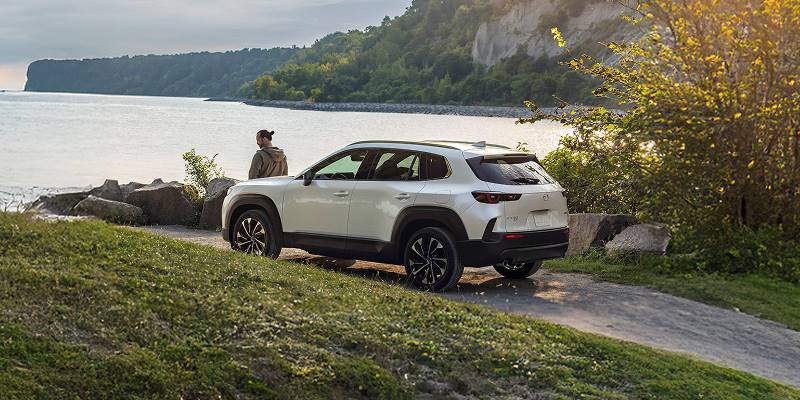
Image courtesy of Mazda USA
0 comment(s) so far on 2026 Mazda CX-50 vs. Subaru Forester